온라인문의
온라인문의

Skin Solutions Powered by Fermentation , Vinegar Series
등록일 2026. 08. 18 조회수 271

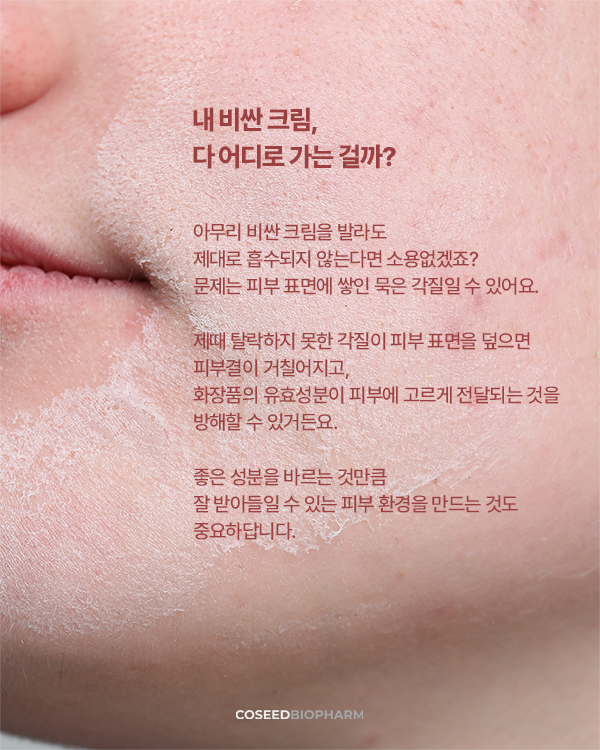
My expensive cream — where does it all go?
Even the priciest cream is useless if it isn't properly absorbed, right?
The culprit may be the built-up dead skin (keratin) accumulated on your skin's surface.
When dead skin that hasn't shed on time covers the surface, skin texture turns rough,
and it can keep a product's active ingredients from being delivered evenly into the skin.
Creating a skin environment that can receive ingredients well is just as important as applying good ingredients.

10,000 years of wisdom — the answer is vinegar
A gentler way to care for built-up dead skin can be found in vinegar.
Vinegar — from the French Vin Aigre ("sour wine") —
has long been used not only in food but also as a beauty material.

In ancient China, vinegar and black beans were used to dye gray hair black;
in Renaissance Europe, vinegar was used to create a clear, bright complexion.
Vinegar — a beauty item spanning East and West
The secret behind vinegar's long-lasting popularity lies in the diverse organic acids produced during fermentation.

Gently switch OFF only the built-up dead skin
During fermentation, vinegar produces various organic acids, including acetic acid.
These organic acids gently loosen the cohesion between dead skin cells,
helping the built-up keratin on the surface shed naturally,
and create a skin environment that can absorb active ingredients more effectively.

Natural fermentation can yield inconsistent results depending on factors like temperature,
humidity, and the condition of the strains.
Through its Dual-Ferm process, Coseed Biopharm controls alcohol fermentation
and acetic acid fermentation stage by stage.
By applying carefully selected fermentation strains and an in-house-developed proprietary culture medium,
we systematically manage fermentation conditions and achieve more stable, uniform quality.
The Dual-Ferm process that makes the difference in quality
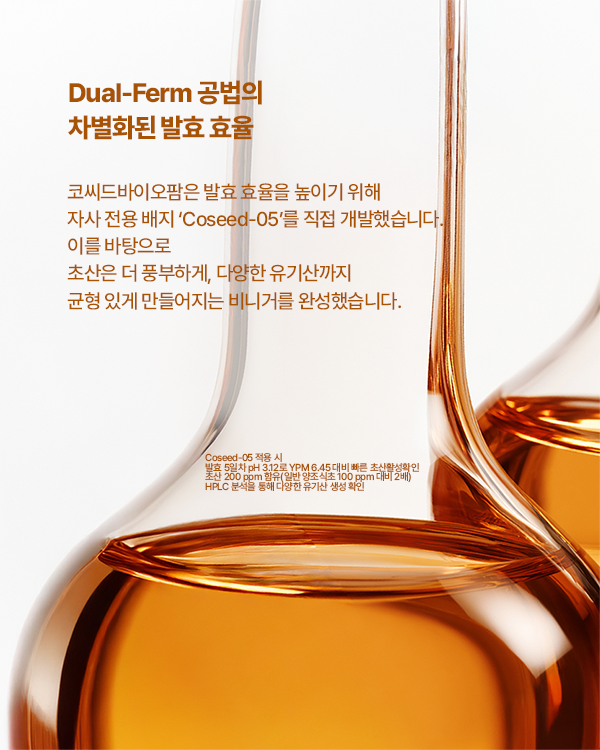
The differentiated fermentation efficiency of the Dual-Ferm process
To boost fermentation efficiency, Coseed Biopharm developed its own proprietary culture medium,
'Coseed-05.' On this basis, we completed a vinegar in which acetic acid is produced more abundantly
and diverse organic acids are formed in a well-balanced way.
When Coseed-05 is applied:Day 5 of fermentation at pH 3.12 — faster acetic acid activity confirmed vs. YPM 6.45Contains 200 ppm acetic acid (2× the 100 ppm of ordinary brewed vinegar)Generation of various organic acids confirmed via HPLC analysis
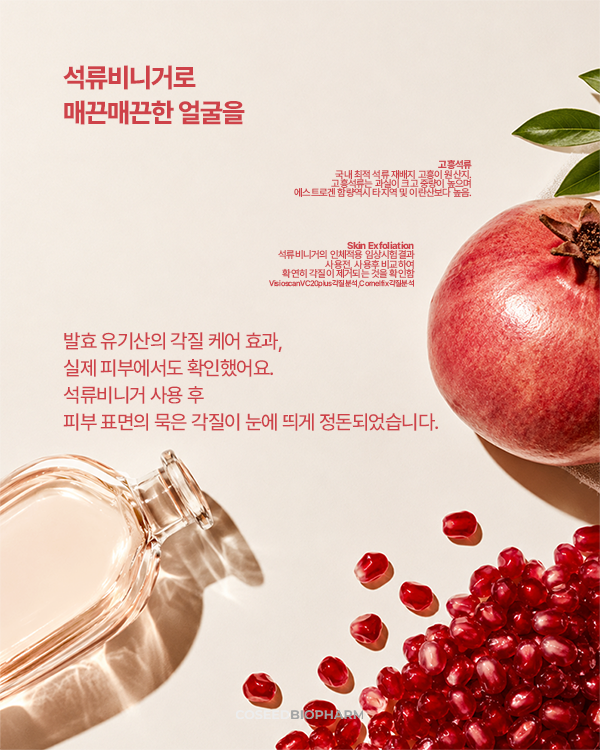
A smooth, sleek face with Pomegranate Vinegar
Goheung PomegranateOrigin is Goheung, Korea's optimal pomegranate-growing region. Goheung pomegranates have large,heavy fruit and a higher estrogen content than those from other regions and from Iran.
Skin ExfoliationIn a human clinical trial of Pomegranate Vinegar, before-and-after comparison confirmed clear removal of dead skin.Visioscan VC20plus keratin analysis; Corneofix keratin analysis.
We confirmed the exfoliating care effect of fermented organic acids on real skin,
too. After using Pomegranate Vinegar, the built-up dead skin on the surface was noticeably tidied up.
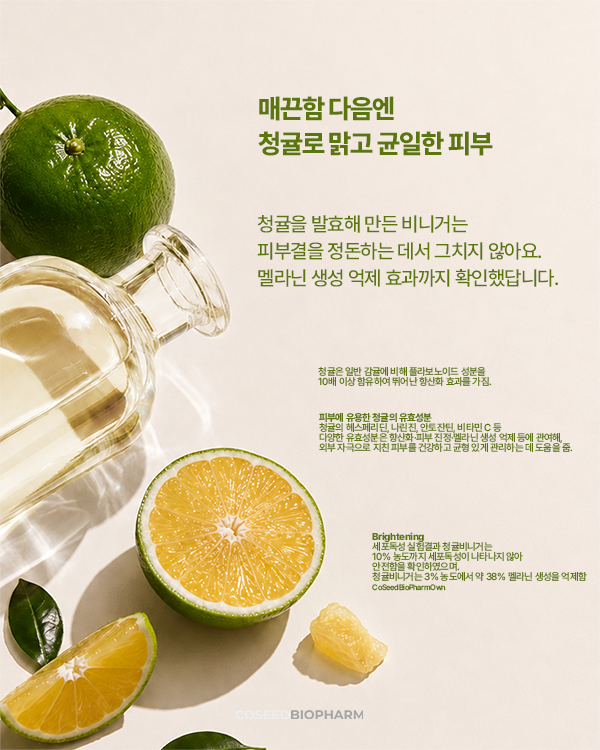
After smoothness — clear, even skin with Green Tangerine
Vinegar made by fermenting green tangerine doesn't stop at refining skin texture
— we also confirmed a melanin-production-inhibiting effect.
Green tangerine contains 10×+ the flavonoids of ordinary tangerine, giving it excellent antioxidant power.
Green tangerine's beneficial activesHesperidin, naringin, anthoxanthin, vitamin C and more take part in antioxidation, skin soothing, and melanin inhibition,helping care for skin tired from external stress in a healthy, balanced way.
BrighteningIn cytotoxicity testing, Green Tangerine Vinegar showed no cytotoxicity up to 10% concentration, confirming safety;at 3% concentration it inhibited melanin production by about 38%. CoSeedBioPharmOwn
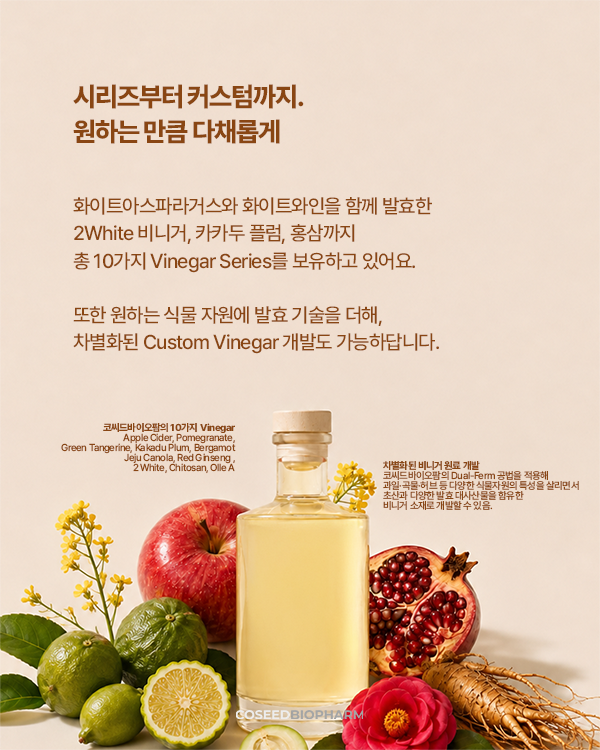
From series to custom — as varied as you want
We hold a total of 10 Vinegar Series, including 2White Vinegar (white asparagus and white wine co-fermented)
Kakadu Plum, and Red Ginseng.
And by adding fermentation technology to the plant resource of your choice,
we can develop a differentiated Custom Vinegar as well.
Coseed Biopharm's 10 Vinegars
Apple Cider, Pomegranate, Green Tangerine, Kakadu Plum, Bergamot,Jeju Canola, Red Ginseng, 2White, Chitosan, Olle A
Differentiated custom ingredient development
Using Coseed Biopharm's Dual-Ferm process, we can develop vinegar ingredients that preserve the traits of diverse plant resources— fruits, grains, herbs, and more — while containing acetic acid and various fermentation metabolites.

- CEO : Park Sung-min Corporate registration number : 301-81-90229 E-mail : mkd@coseed.co.kr
- Address : 68, Osongsaengmyeong 2-ro, Osong-eup, Heungdeok-gu, Cheongju-si, ChungbukTEL : 043-274-9097FAX : 043-274-9098